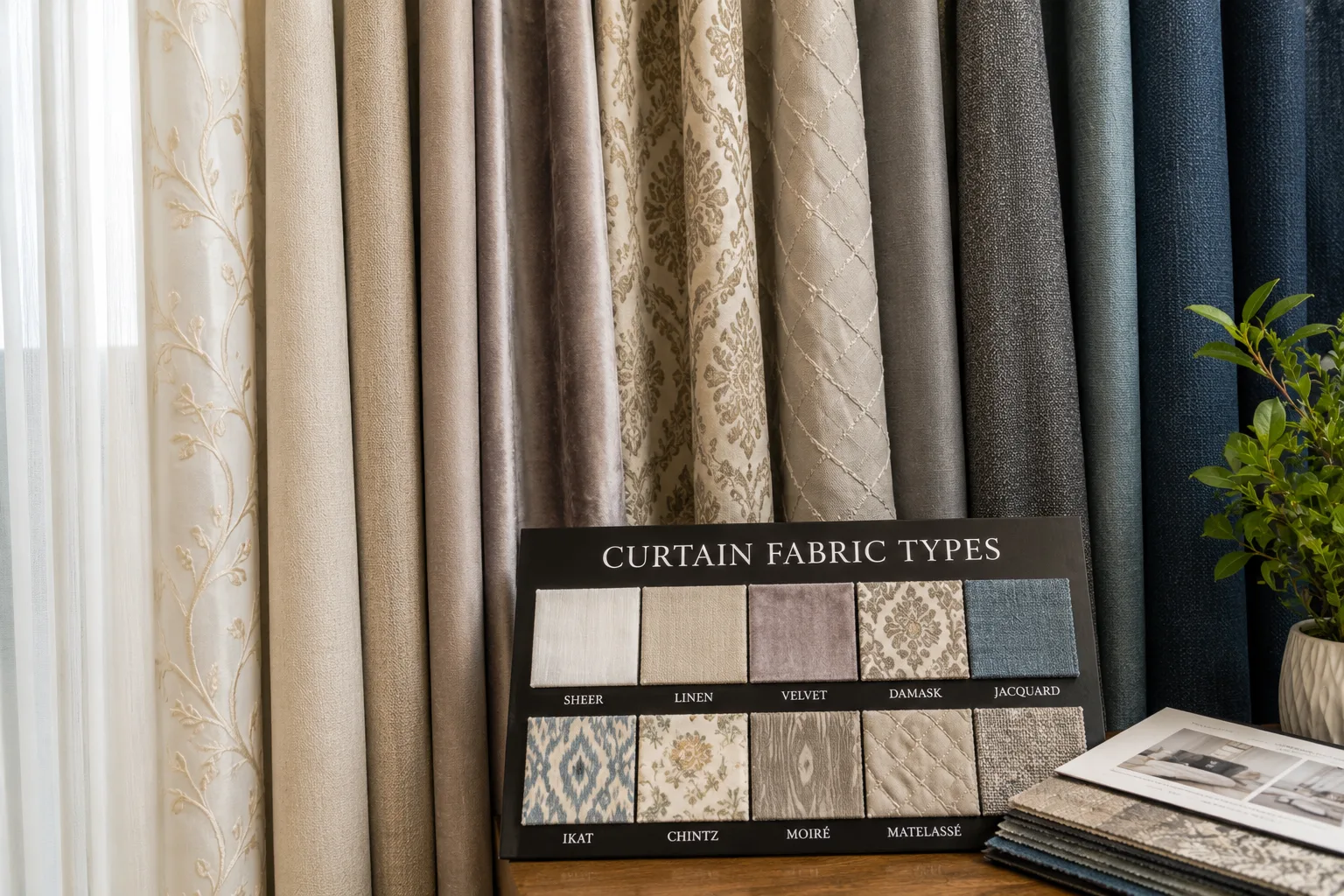
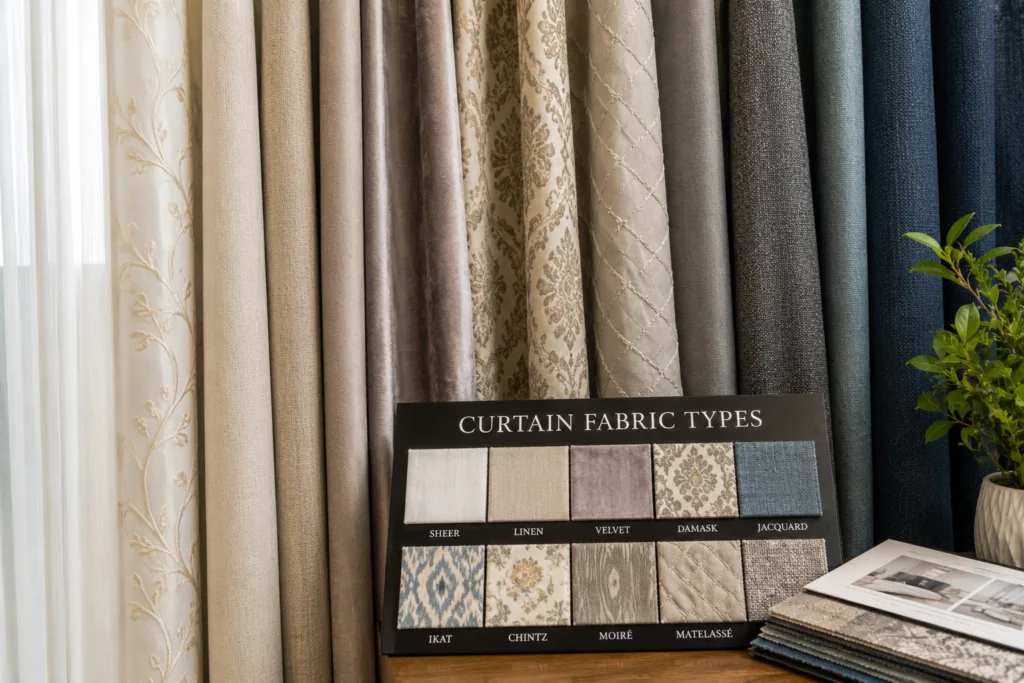
The right curtain fabric comes down to three things: how much light you want in the room, what mood you are trying to create, and how much upkeep you are willing to take on. Get those three questions answered, and the choice becomes much clearer.
Whether you want soft, filtered light through a sheer or a rich, insulating drape for a formal room, there is a fabric construction built exactly for that purpose.
At Gorgeous Curtains, our trusted local curtain fabric supplier is James Dunlop Textiles, known across New Zealand for premium-quality furnishing fabrics that combine style, durability, and practicality. Here is what you need to know before choosing.
How to Choose the Right Curtain Fabric
Before diving into specific fabrics, use these three filters to narrow your options:
1. How Much Light Do You Want?
- Maximum light: sheer fabrics such as leno, lace, or fil coupé
- Filtered light: mid-weight fabrics such as chintz, ikat-style prints, or matelassé
- Privacy and darkness: heavier fabrics such as felt, moquette, or fully lined damask
2. What Mood Are You Creating?
- Formal and elegant: damask, moiré, or velvet
- Relaxed and natural: linen, fil coupé, or lace
- Modern and practical: microfibre or matelassé
- Warm and cosy: felt, moquette, or lined options
3. How Much Upkeep Are You Willing to Do?
- Easy care: microfibre and polyester-blend fabrics wipe clean and resist dust — ideal for busy households
- Moderate care: most woven fabrics such as chintz and matelassé can be professionally cleaned
- Specialist care: delicate fabrics such as velvet, lace, and moiré generally require dry-cleaning
💡 Not sure where to start? Our team at Gorgeous Curtains offers free consultations across Auckland. We will help you match the right fabric to your room, your light, and your lifestyle.
The Most Common Curtain Fabric Types
Below we have grouped fabrics by weight so you can quickly identify which category suits your needs. All fabric types listed are available through James Dunlop Textiles, our primary supplier.
Lightweight and Sheer Fabrics
These fabrics filter or diffuse light without blocking it. They are popular in north-facing rooms, open-plan living spaces, and coastal Auckland homes where natural light is abundant and privacy is still needed.
Leno
Leno weave fabrics twist yarns together to stabilise the weave, helping sheer curtains maintain their shape over time. They allow soft, filtered light into a room while providing a clean, structured appearance.
Lace
Lace curtains feature decorative openwork patterns that create an airy, elegant look. They suit spaces where softness and natural light are the priority — particularly traditional or heritage-style interiors.
Fil Coupé
Fil coupé (pronounced feel-koo-pay, French for “cut thread”) features decorative woven motifs with excess threads trimmed from the reverse side. Often used on sheer bases, it creates a subtle texture while still allowing natural light into the room — a popular choice for relaxed, modern interiors.
Mid-Weight Fabrics
These fabrics offer a balance of light filtration and substance. They drape beautifully and suit living rooms, dining areas, and bedrooms that do not require full blackout.
Chintz
Chintz is a tightly woven cotton fabric with a polished glazed finish. It creates a crisp, refined appearance that suits traditional interiors, formal lounges, and dining rooms. Its smooth surface also makes it relatively easy to keep clean.
Ikat-Style Prints
Ikat fabrics are created by dyeing yarn sections before weaving, giving the fabric a distinctive blurred, handcrafted pattern effect. They add personality to neutral interiors and work well as a feature curtain in living rooms and studies.
Matelassé
Matelassé has a raised, quilted appearance woven directly into the fabric. It adds texture and depth without overwhelming a space, making it a popular option for bedrooms and relaxed living areas where you want interest without a heavy feel.
Moiré
Moiré fabrics are recognised by their soft watermark-like finish, created through a specialised pressing process. The subtle movement in the pattern gives rooms a luxurious and decorative quality — a classic choice for formal dining rooms and master bedrooms.
Heavyweight and Insulating Fabrics
In older Auckland villas, bungalows, and homes with limited insulation, a heavier curtain fabric can make a noticeable difference to warmth and noise levels — particularly in south-facing rooms during winter.
Damask
Damask is a jacquard-woven fabric whose pattern is created through contrasting weave directions rather than printed colour. It has a subtle sheen and an elegant, timeless appearance. When lined, damask becomes one of the most effective curtain fabrics for thermal insulation.
Felt
Felt is a dense fabric made through heat and pressure rather than weaving. Its thickness makes it excellent for insulation, privacy, and sound absorption — particularly useful in bedrooms adjacent to busy streets or open-plan family homes.
Moquette
Moquette is a strong, pile-style fabric with excellent durability and warmth. Its dense texture creates a rich, cosy atmosphere in both classic and modern interiors and holds up well in high-traffic rooms.
Velvet
Velvet is a cut warp pile fabric with a soft, tactile surface and exceptional warmth. It is particularly well suited to formal living rooms and bedrooms during the cooler months, and adds an instant sense of luxury to any space.
Quick Reference: Fabric by Room
Use this table as a starting point — our team is always happy to help you narrow it down further.
| Fabric | Key Characteristics | Best For |
|---|---|---|
| Bedroom | Felt, velvet, microfibre, lined damask | Warmth, darkness, and insulation |
| Living Room | Fil coupé, leno, matelassé, moiré | Light, texture, and visual interest |
| Dining Room | Damask, chintz, moiré | Formal finish and timeless elegance |
| Family / Kids | Microfibre, moquette | Durability and easy maintenance |
| Coastal / North-Facing | Leno, lace, fil coupé | Light diffusion with privacy |
| Older NZ Homes | Felt, velvet, lined damask | Insulation and warmth |
Do Not Overlook the Lining
Fabric choice is only half the decision. The right lining transforms how a curtain performs — and it is one of the most commonly overlooked steps by homeowners.
The main lining options are:
- Thermal lining — reduces UV light passing through the fabric and improves insulation
- Blackout lining — eliminates light penetration entirely, ideal for bedrooms and media rooms
- Dimout lining — a woven option that allows a small amount of light through, popular for living areas where some ambience is desired
- Interlining — an extra layer of soft padding between the face fabric and lining, adding body, warmth, and a luxurious drape
⚠️ Important: Avoid bleach on coloured or patterned fabrics. Bleach strips colour permanently and cannot be reversed. For mould or staining issues, natural cleaning solutions are always the safer choice. Read our guide: How to Remove Mould from Curtains Without Washing.
A Note on Fabric Care
Different fabric constructions require different care approaches:
- Microfibre and polyester blends are generally machine washable or easy to spot-clean at home
- Woven mid-weight fabrics such as chintz and matelassé respond well to professional dry-cleaning
- Delicate fabrics including velvet, lace, and moiré should always be professionally cleaned to maintain their finish and structure
- Thermal and blackout linings are not machine washable — hand-wash gently if needed and drip-dry with the coated side facing out, or have them professionally cleaned
Ready to Choose the Right Fabric for Your Auckland Home?
At Gorgeous Curtains, we design and install beautiful made-to-measure curtains and blinds for homes across Auckland and beyond. Whether you know exactly what you want or are just beginning to explore your options, our team will guide you through fabric selection, lining choices, and header styles to get the perfect result for your space.
Explore our range: Curtains | Blinds | Accessories | Get a Free Quote