Everyone deserves a peaceful room — a place where outside noise doesn’t interrupt sleep, relaxation, or privacy. Whether you live near a busy road, have noisy neighbours, or simply want a quieter space to unwind, learning how to soundproof a room can significantly improve your quality of life.
The good news? Effective soundproofing doesn’t always require expensive renovations. With the right window treatments and a few smart additions, you can create a calm, restful sanctuary without major structural changes.
Quick Answer – To soundproof a room, focus on blocking noise at windows with heavy or acoustic curtains, sealing gaps around doors and frames, adding soft furnishings to absorb sound, and layering multiple solutions for the best results.
Why Soundproofing Matters
Reducing unwanted noise isn’t just about comfort — it directly affects your wellbeing.
- Better sleep quality: Even low-level noise can disrupt sleep cycles and reduce deep rest
- Enhanced privacy: Soundproofing helps stop conversations and personal sounds from travelling outside the room
- Improved comfort: A quieter space feels calmer, more relaxing, and easier to enjoy
Bedrooms, home offices, nurseries, and living spaces all benefit from effective soundproofing.
Where Does the Noise Come From?
Sound usually enters a room through weak points such as:
- Gaps around windows and doors
- Thin walls or floors
- Hollow doors
- Hard surfaces that reflect sound waves
Identifying these areas helps you choose the most effective soundproofing approach.
Soundproofing Windows: Start with Curtains and Blinds
Windows are the biggest source of outside noise in most homes. Even small gaps around frames allow sound to travel through, and standard single-pane glass offers minimal noise protection. This is where window treatments make the biggest difference.
Noise Cancelling Curtains
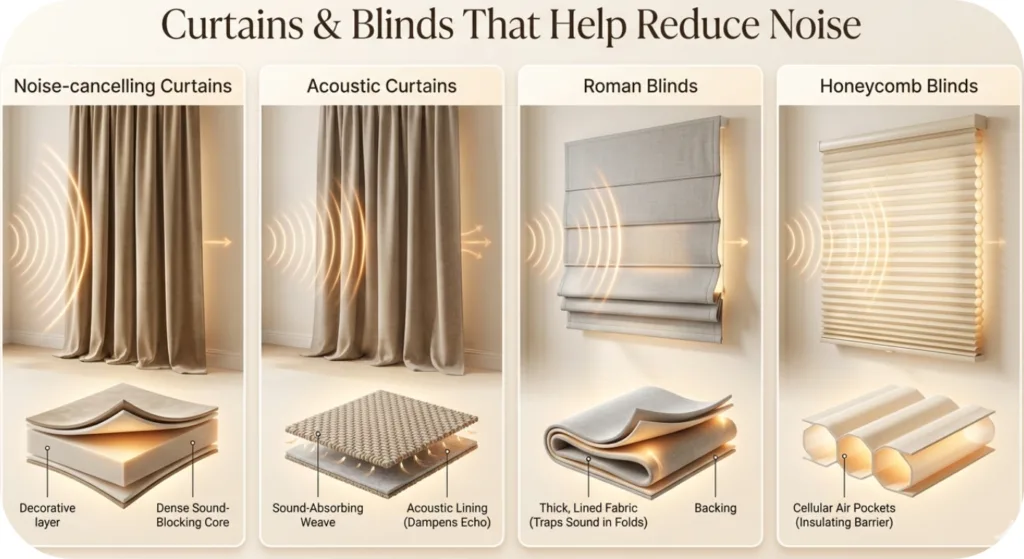
Noise cancelling curtains are one of the most effective and stylish ways to reduce sound entering a room. Made from thick, dense fabrics, they absorb sound vibrations before they spread inside your space.
What to look for:
- Heavy fabrics such as velvet or wool
- Thermal or blackout linings for extra density
- Floor-to-ceiling length
- Extra width to cover edges and gaps
Pro tip: Extend the curtain rod 15–20 cm beyond the window frame on each side to prevent sound from leaking around the edges.
Acoustic Curtains
Acoustic curtains are specifically engineered with multi-layered, sound-absorbing materials designed to trap and disperse sound energy.
Benefits include:
- Superior sound absorption
- Reduced echo and reverberation
- Improved room-to-room privacy
While highly effective, acoustic curtains can be expensive and limited in style options. A high-quality heavyweight curtain with a thick thermal or blackout lining can offer very similar results with greater design flexibility.
Blinds That Support Soundproofing
Certain blinds work well alongside curtains to create layered protection:
- Roman blinds: Thick, fabric-based designs with pleats that help absorb sound
- Honeycomb blinds: Cellular structures that trap air, naturally dampening noise while improving insulation
Using blinds together with heavy curtains creates a powerful barrier against unwanted noise.
Seal the Gaps Around Doors and Frames
Noise behaves like water — it finds the smallest gaps.
- Install a door sweep: Blocks sound travelling under doors
- Use weatherstripping: Apply foam or rubber seals around door and window frames
- Apply acoustic sealant: Permanently fills gaps around frames and joints
These small fixes can noticeably reduce noise penetration.
Use Soft Furnishings to Absorb Sound
Hard surfaces reflect sound. Soft furnishings help absorb it.
- Bookshelves: A full bookcase against a noisy wall adds mass and absorbs vibrations
- Thick rugs: Especially effective on hard floors when paired with underlay
- Fabric wall décor: Tapestries, quilts, or soft wall panels double as décor and sound absorbers
Long-Term Structural Soundproofing Options
If you’re renovating or building, these solutions offer significant noise reduction:
- Double-glazed windows: Create an air buffer that dramatically reduces sound transmission
- Solid-core doors: Block more sound than hollow doors
- Improved insulation: Fibreglass or acoustic insulation absorbs sound more effectively
- Thicker plasterboard: Adds mass, helping walls block noise naturally
Even small gaps in glazing or walls can reduce effectiveness, so sealing is essential.
Maximising Your Soundproofing Results
For the best outcome:
- Layer multiple solutions instead of relying on one fix
- Choose dense, heavyweight curtain fabrics
- Extend curtains beyond window frames
- Pair soundproofing with thermal and blackout benefits
These combined methods create a more complete noise barrier without major renovation costs.
Your Peaceful Sanctuary Awaits
Soundproofing works best when you build layers. You don’t need to do everything at once — starting with your windows delivers the biggest impact for your investment. With the right fabrics and a few thoughtful upgrades, outside noise fades away the moment you close the door.
Looking to enjoy deeper sleep, more privacy, and a calmer home?
Explore the range at Gorgeous Curtains to find beautifully designed curtains and blinds that help reduce noise while elevating your space.